
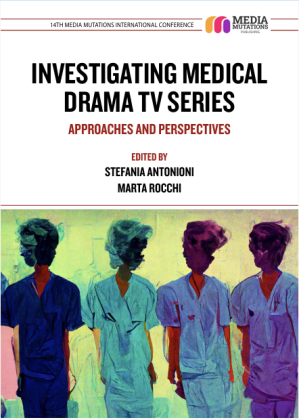
Investigating Medical Drama TV Series: Approaches and Perspectives. 14th Media Mutations International Conference
Synopsis
Since its inception in the 1960s, medical drama has emerged as a prominent genre within the television landscape. Its nomenclature derives from its dual focus: the hospital setting as the backdrop for events and the narrative exploration of medical cases, professional dynamics, and interpersonal relationships. This genre's widespread prevalence and success, primarily within the realm of television, have garnered the attention of media studies scholars, critics, medical device providers, and the broader healthcare community. In light of the recent Covid-19 pandemic, there is an increased imperative to examine the influence of this global health crisis on the portrayal of medical professionals in television series.
While some of the most renowned medical TV series, notably E.R., have ceased airing, over-the-top (OTT) platforms like Netflix and Amazon Prime Video enable continued viewership. Additionally, there has been a notable surge in global medical drama productions in recent years. Research efforts have predominantly delved into the narrative structures of medical dramas and the role of the audience in their reception. These narratives are also appreciated for their pedagogical value, serving as potent educational tools. The popularization and societal impact of medical dramas have been studied, particularly in their influence on medical students and the public's perception of healthcare.
Medical dramas often address significant social issues and have, as a result, been examined from a bioethical standpoint. They additionally play a pivotal role in the representation of marginalized groups, making them a focal point in gender studies as they explore the evolving depictions of diversity. Linguistically, the specialized language employed in these productions has generated substantial research in areas such as dubbing, medical terminology, and textual analysis. This multifaceted genre continues to be a rich and fertile field of academic inquiry.
Drawing on these multi-disciplinary perspectives, the conference aims to promote discussion and share research results on medical drama TV series focusing on the different methods and approaches employed for their analysis.
Chapters
-
Why Medical Drama? An Interdisciplinary Study of Narrative Layers and Societal Impact
-
Much More than a Narrative Genre. Theoretical and Research Perspectives on Medical Drama
-
“Television Can Damage your Health?”. Italian Doctors and Medical Drama: A Qualitative Approach
-
The Politics of Fictional Medicine. Entertainment, Propaganda, and Education in Chinese Medical Dramas in the Xi Era
-
Analysing the Inner Structure of Episodes in House, M.D. through Network Analysis
-
Toward the Automatic Identification of Isotopies
-
The Genre and the Nation. Italian Medical TV Series and the Geography of their Consumption
-
Adopting NLP Techniques to Analyze Twitter Social Discourses around The Good Doctor
-
When Medical Drama Meets Teen Drama. Youth and Mental Health in Italian TV Series
-
A Lost Generation. Youth and Its Illnesses in Italian Medical Drama
-
New Trends in Health Communication. Entanglements between Social Media, TV Series, Psychology, and Mental Health
-
Polysemy of Drama. The Representation of Autism Spectrum Disorder
-
Covid, Post-Covid and Covid-free Fantasy Worlds in Medical Drama TV Series
-
Covid-19: Narrative Engine and Characters Embedding
-
Screening Gender Medicine. Health and the Gendered Body in Recent US-Based Medical Dramas and Dramedies
-
From Paternalism to Paternity. The Portrayal of Fatherhood in Medical TV Series
-
Biomedical Imaging and Rhetoric of Diagnosis in Medical Dramas and Docuseries
-
When the Doctor is Sick, or We Could Say, the Medical Antihero
-
“No Pulp Scenes on Raiuno!”. The Case of Cuori, an Italian Medical Drama on Broadcast Television
-
The (Many) Functions of disease Metaphors in the Medical Drama TV Series House, M.D.
Downloads
Published
December 23, 2023
Series
Copyright (c) 2025 The Authors

Details about this monograph
ISBN-13 (15)
9788894731811
How to Cite
Antonioni, S., & Rocchi, M. (Eds.). (2023). Investigating Medical Drama TV Series: Approaches and Perspectives. 14th Media Mutations International Conference. Media Mutations Publishing. https://doi.org/10.21428/93b7ef64.8ac7a6ca