
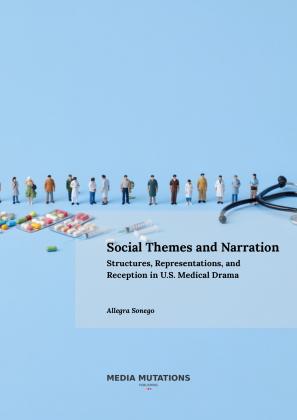
Social Themes and Narration: Structures, Representations, and Reception in U.S. Medical Dramas
Keywords:
Medical Drama, TV Series, Narrative Ecosystems, Social ThemesSynopsis
This monograph examines contemporary American medical drama as a privileged site for the cultural processing of social controversy. Analyzing a corpus of seven series — including ER, House, Grey's Anatomy, New Amsterdam, Chicago Med, and The Good Doctor — the study argues that the television hospital functions as a social microcosm in which the major fractures of contemporary US society converge, including the COVID-19 pandemic, abortion rights, systemic racism, and gender-based violence.
The volume's central theoretical contribution is the concept of character embedding: the structural integration of controversial social themes into character identity and long-term development, as opposed to their episodic containment in "special episodes." Through four identifiable mechanisms — retrospective revelation, progressive integration, identity constitution, and professional embodiment — medical dramas bind social issues to characters that audiences follow across seasons, investing them with emotional weight and narrative permanence unavailable to other televisual formats. The hospital's hybrid narrative architecture, founded on the interaction of medical case plot, professional plot, and sentimental plot, makes the genre structurally predisposed to integrating the present with unusual immediacy.
The analysis combines textual methods with reception data gathered through interviews and Reddit communities, positioning medical drama simultaneously as instrument of ideological reinforcement and site of potential resistance. Series construct preferred readings around controversial issues while leaving space for negotiated and oppositional decoding. By functioning as narrative archives of US society — most dramatically evidenced by their near-real-time response to Dobbs v. Jackson and the COVID-19 crisis — these series constitute active discursive agents in the formation of contemporary cultural imaginaries.
Downloads
Published
March 2, 2026
Series
Copyright (c) 2026 Allegra Sonego (Author)

Details about this monograph
ISBN-13 (15)
9788894731842
How to Cite
Sonego, A. (2026). Social Themes and Narration: Structures, Representations, and Reception in U.S. Medical Dramas. Media Mutations Publishing. https://doi.org/10.66062/HCAP8516